
Formosan Termites in Tampa Bay: What They Are, When They Swarm, and How We Treat Them
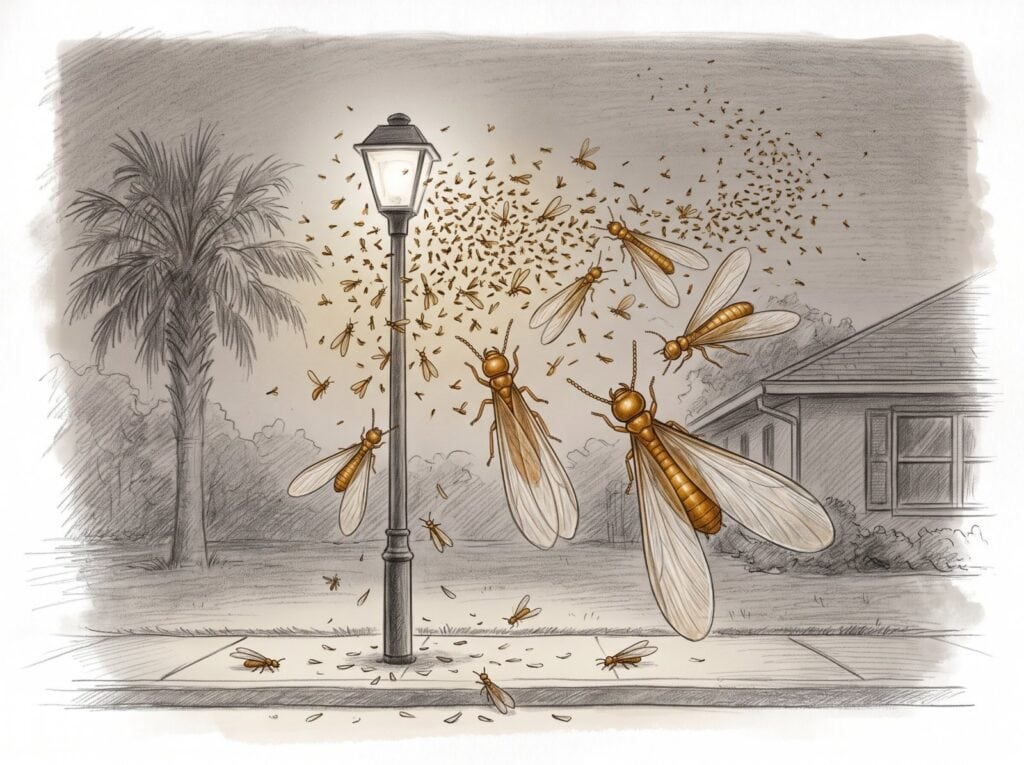
Formosan termites are subterranean termites, the kind that live in the ground, just bigger and a lot more of them. They swarm in the evening from about April into June, and they hit their peak in May, right around Mother's Day. Some nights you'll see so many around the streetlights you can hardly see the lights.
If that's what you saw, here's what they are, how to tell them from our everyday termites, and what it takes to deal with them.
Think you saw Formosans? Text us a picture.
Snap a close-up of the bugs or the wings and send it with your address. We'll tell you what it is. If it's termites, Austin, our termite tech, comes out, looks at where they came from, and tells you which termite it is and what it'll take. There's no charge to come look.
How to tell a Formosan from our everyday termites
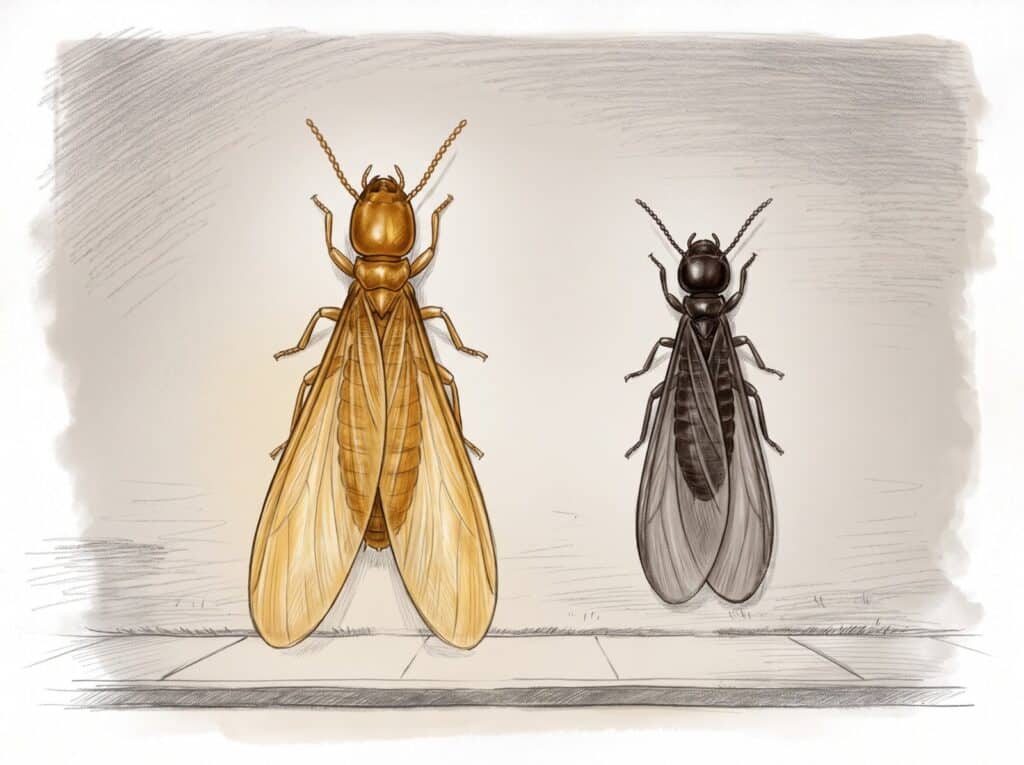
The easiest way is when you saw them. Our native subterranean termites swarm in the daytime, usually from about the middle of January to Tax Day. Formosans wait until spring is nearly over, and they come out right after the sun goes down.
| Formosan termites | Our native subterranean termites | |
|---|---|---|
| When they swarm | About April into June, peak in May | About mid-January to mid-April, a few into May |
| Time of day | Right after sunset, straight to the lights | Warm, sunny afternoons, usually after a rain |
| Color of the swarmers | Orange or amber | Dark, almost black |
| Size with wings | About half an inch | Well under half an inch |
| Wings | Covered in tiny hairs | Smooth |
If they're swarming after dark around a light, there's one more possibility: drywood termites swarm at night too, and they also go to lights. That's why we'd rather see a picture than guess. Here's more on what termite swarmers mean and what to do.
Why Formosans are a bigger deal
It's not that one Formosan termite eats more than another termite. It's the numbers. A Formosan colony can run to several million termites, and it forages a long way through the soil looking for wood. Put that many mouths on your house and the damage adds up fast.
They also do something our native termites don't do much of. They build what's called carton nest right inside the house. It's a mix of soil, chewed-up wood, and their own droppings and saliva, kind of like papier-mâché, and they pack it into wall voids. When we open up a wall and find that, the wall's been theirs for a while.
The Formosan is counted among the most damaging termites in the world. I don't say that to scare you. I say it so you take a swarm seriously.
How they got here
Formosans aren't from here. They came from overseas, most likely riding along in shipped wood and on boats, and they've spread through Florida's cities since. This year we've seen more of them in Pinellas County than ever before. The swarmers are drawn to lights, which is one more way they end up landing on houses and boats.
Here's exactly what happens when you call
We set a time that works for you. Austin or I come out and look at where they came from, the foundation, and the wood around it. Then we tell you what kind of termite it is, how far it's gone, what it'll take, and what it'll cost, in plain English. We go out as if you'd paid us $10,000 for the advice, and we give you the best advice there is, whether we get the job or not. If it turns out you don't have termites, we'll tell you that too. There's no charge to come look and no obligation.
Texting? Put your address in the first message, and a picture if you've got one.
If you see them swarm
- Save a few. Catch some on clear tape or put them in a sandwich bag, wings and all. A close-up picture on your phone helps too.
- Notice where they came from. Out of a wall, a window frame, or up through the floor means the colony is likely in the house. Only outside around the streetlights or the porch light, they may have come from the neighborhood, not your house.
- Turn off the outside lights for the evening, so you're not calling more of them to your house.
- Don't bother with a can of spray. The colony is in the ground or in the walls, and the store stuff won't get there.
- Text us the picture with your address.
How we treat Formosan termites
Formosans are subterranean, so the colony lives in the ground. That's where the fight is. We dig a small trench around the house and put a liquid termiticide in before we backfill it. Then we put monitoring stations in the ground and check them every three months. If a station shows activity, we treat around that spot. More on our subterranean termite treatment.
Here's what doesn't work on them. A tent doesn't fix subterranean termites, because the colony isn't in the house to begin with. And bait stations by themselves can leave gaps, because stations sit apart and a colony can work the ground in between. We use them to watch, not as the whole treatment.
And here's the honest part. In a neighborhood where Formosans are established, nobody can promise they'll never come back around. What you can control is a treated soil line around the house and somebody checking it. That's why the yearly renewal inspection matters as much as the treatment. If you want to see every option side by side, here's every termite treatment option, explained straight.
Questions people ask
When do Formosan termites swarm in Florida?
From about April into June, shortly after sunset, with the peak in May. Around here that's right around Mother's Day.
What do Formosan termite swarmers look like?
They're orange or amber, about half an inch long with their wings, and the wings are covered in tiny hairs. They swarm right after sunset and fly to lights, sometimes by the tens of thousands.
Are Formosan termites worse than regular termites?
They're the same kind of termite, subterranean, but a Formosan colony can run to several million termites and forages a long way. More termites means more damage, faster.
Does tenting kill Formosan termites?
No. Formosans live in the ground, so a tent over the house doesn't reach the colony. They're treated in the soil, with a liquid termiticide around the house and monitoring stations.
Can I treat Formosan termites myself?
Store products are unlikely to work, because the colony is underground or packed into the walls. This one needs a professional treatment and regular inspections.
Our guarantee: If the bugs come back, so do we. That holds as long as you keep your annual renewal inspection current.
Saw a swarm? Make one call before you do anything else
It costs you nothing to have it looked at. You'll know if it's termites, which termite it is, and what it'll take. Then you decide.
As long as GOD keeps making them, we'll keep killing them. Thanks, and you have a great day.
Coby
P.S. If it's swarming right now, it's probably just after dark. Save a few, take a picture, and text it tonight. We'll call you back first thing.