
The Rest of the Story | Coby’s Tentless Termite & Pest Control
Dear Tampa Bay Homeowner,
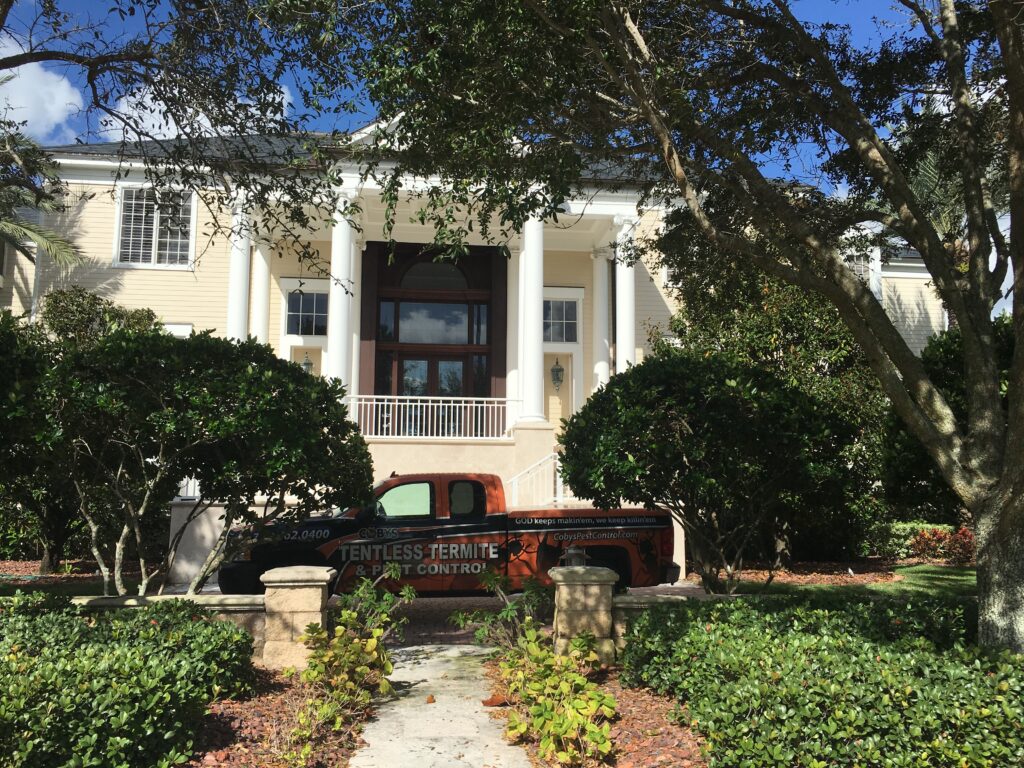
A few years back, the Belleview Biltmore’s chief engineer called me. Not to try something new — to fix a tentless job that had already failed. Somebody else’s work. That’s not a story I lead with because it makes me look good. I lead with it because it’s the reason I know what actually works and what doesn’t.
My name is Coby McConnell. I’m president of Coby’s Tentless Termite and Pest Control in Clearwater. I started in this trade in 1986, and by the time that phone call came in, I’d been chasing tentless termite treatment for the better part of a decade — ever since watching a small competitor bid a fumigation job differently at that same building, injecting the walls instead of tenting the whole structure. It took me years to fully understand why that idea worked and why some attempts at it don’t.
Try finding another termite company owner who can say this: in the first thirteen years doing tentless work, from 2003 to 2016, I was personally on every job but five — over 2,500 termite services across Tampa Bay. Starting in 2013, Austin, my son, worked alongside me — I’d drive out and drill the home, and hand it off for him to treat, the harder part of the job. We kept working that way together for years after. I didn’t back off completely until about three years ago. These days, Austin’s the one you’ll see at the door, but the standard’s the same one I built this company on.
Across everything I’ve done in this trade since 1986 — termites, roaches, ants, rodents, lawns — I’ve been out on more than 70,000 stops.
I won’t tell you tentless is right for every home. It isn’t. Some homes genuinely need a tent, and I’ll tell you that straight if yours is one of them. But for the ones where it fits, here’s the difference: tenting kills what’s there the day you do it, then the gas leaves and the termites can come right back in on the next swarm. What we use has a residual effect. Once it’s in the wood, nothing is known to take it out.
Now let's talk about drywood termites specifically, since that's usually what tentless is treating.
Subterranean termites live in the soil and build mud tubes up into your home. Drywood termites don’t need any of that. They live their whole lives inside the wood. The colony, the eggs, the damage, all of it is in the boards.
Spot treatment only makes sense if you’re only ever going to have one colony, ever. In an established neighborhood — old trees, old fences, older homes — that’s not realistic, for as long as you live there. There can be thousands of separate colonies scattered through a neighborhood like that, each one on its own clock. A colony takes five years or more to mature, then it swarms every year after that during the same 60-to-90-day season, and it sends out more swarmers each year as it keeps growing. With that many colonies at every different stage, every swarm season, some of them are mature and sending swarmers out, and if the wind’s blowing toward your house, some of them land on you. That happens year after year, for a lifetime. Treat one spot and you’ve solved the colony you found. You haven’t solved the neighborhood. That’s why we treat the whole structure instead.
What we use has a residual effect. It’s inorganic, so it doesn’t break down over time. That means it’s protecting the wood they haven’t reached yet, not just killing the ones you happened to see.
How to tell termite droppings from everything else
If you put the pellets under a magnifier, you’ll see they have six sides. That shape is the giveaway, because nothing else your house produces looks like that. Carpenter ant debris is uneven wood shavings, often with bits of dead insects mixed in. Powderpost beetles leave a fine powder like flour, not pellets.
Here’s why the pile keeps coming back in the same place. Drywood termites push their droppings out through tiny openings called kickholes, about the size of a pen tip. The pile builds up underneath the hole. Clean it up and they keep pushing more out.
And here’s the thing about finding wings on a windowsill. It doesn’t mean termites just flew in from outside. It means a colony that’s already living inside your wood is mature enough to swarm — and a drywood colony takes a minimum of five years to get there. If you’re seeing wings, they’ve been in there for years already. They didn’t come through the window. They came out of it.
Our guarantee is simple
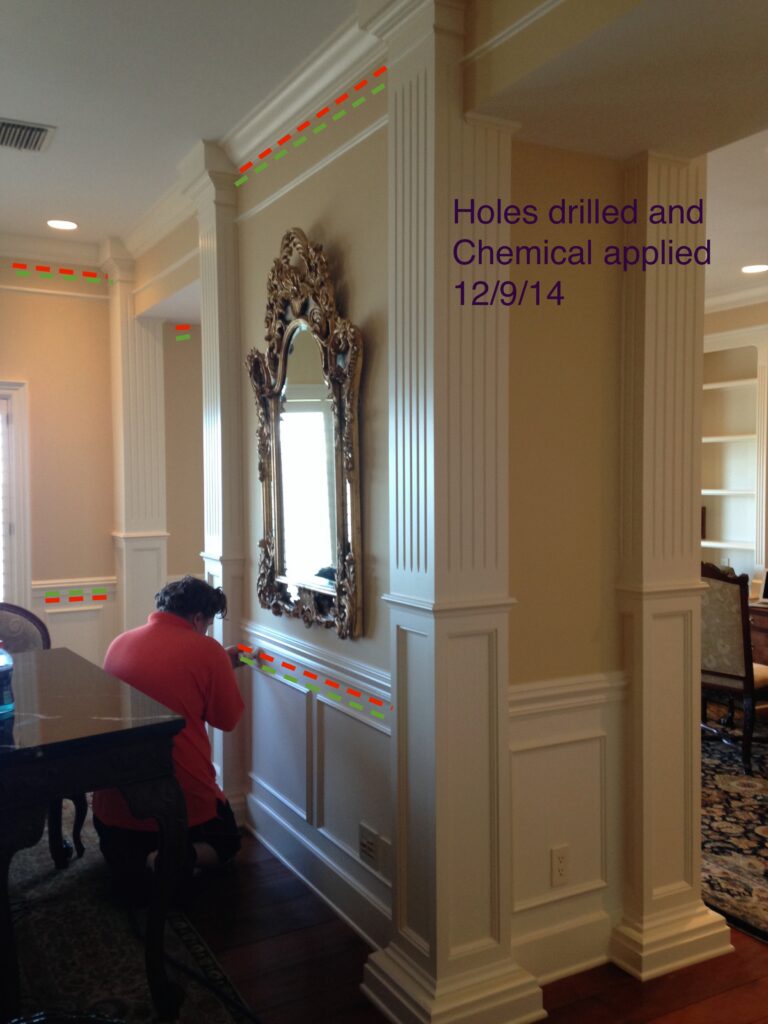
If the bugs come back, so do we. That’s not just a line — it’s why we come back out every single year and inspect the home again under warranty. You’re not just buying a treatment. You’re buying a standing appointment with us, year after year, for as long as you want it.
If you’ve got a question about termites, or anything else crawling around your house, call me — or Austin, since he’s the one out there now — at 727-462-0400.
“As long as GOD keeps makin’ em, we’ll keep killin’ em!”
Coby
